
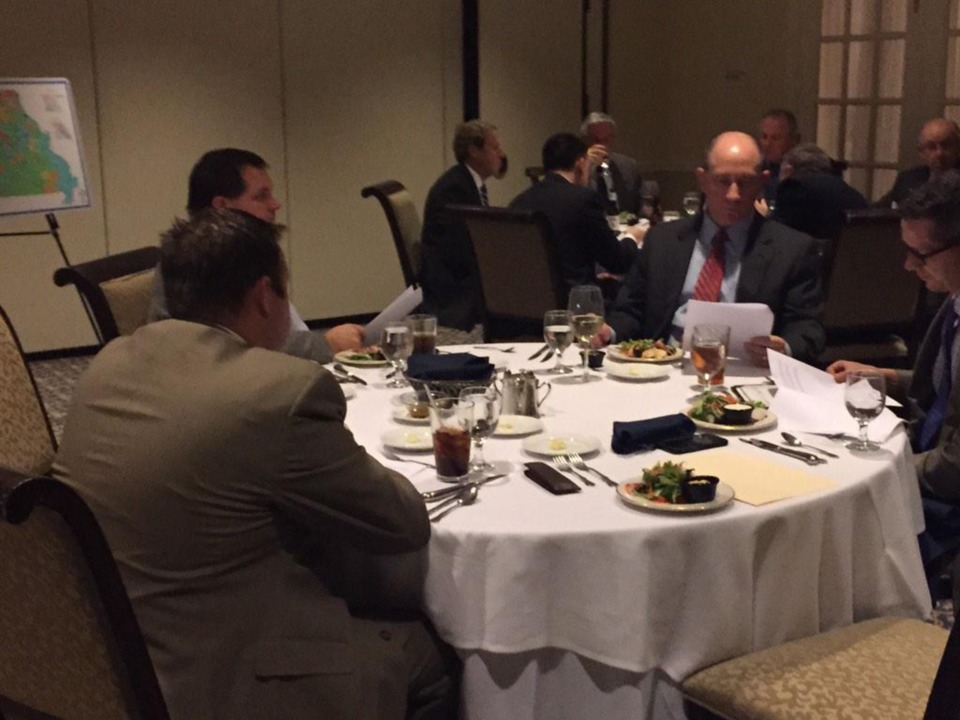
Official meetings are supposed to be open to the public, but there have been government meetings held in private country clubs and Missouri citizens have been kicked out of public hearings. The state legislature even keeps their own records secret, yet expects others to follow open government laws.
A recent Missouri court ruling has allowed the legislature to essentially ignore some of the Sunshine Law, despite bipartisan agreement that the Missouri General Assembly needs to be more transparent and accountable.
The full report is below and downloadable here.
Some highlights:
- Both Republican and Democratic state auditors have called for the legislature to come into compliance with the Sunshine Law.
- Legislators from both parties have refused to turn over their emails to reporters in Sunshine requests. At the same time, legislators from both parties have demonstrated that compliance is possible.
- Reporters and citizens have been denied the right to record public hearings.
- Legislative committees have met in private country clubs and restaurants instead of publicly accessible hearing rooms where proceedings may have been recorded.
No matter what party you believe in, this isn’t right. The Amendment 1 will require that the General Assembly operate under the same open records law as other public entities in Missouri.
BIPARTISAN AGREEMENT: LEGISLATORS ARE NOT BEING TRANSPARENT
Republican and Democrat State Auditors have both criticized legislative leaders for ignoring the Sunshine Law
For years, some legislative leaders and members have claimed that Missouri’s Sunshine laws don’t apply to their emails, records, and even claimed exemption for some committee meetings.
Former GOP Auditor Tom Schweich’s 2013 Senate audit read: “It is a double standard for the legislature to impose additional requirements on other public governmental bodies while enjoying a blanket exemption from the Sunshine Law.”
His audits found numerous shortcomings, including this report on the House:
The Committee on Administration and Accounts does not maintain formal written meeting minutes, as required by state law. The House lacks a formal written policy regarding the use and retention of e-mail correspondence and asserts that the Sunshine Law does not apply to records of individual members…
Democratic State Auditor Nicole Galloway reported in her Senate and House audits, “The two chambers…have significant shortcomings when it comes to open records and policies related to the Sunshine Law.”
Leaders in both parties have refused to turn over records
Sunshine Week: Some Republican and Democrat leaders “denied requests” to abide by Sunshine Law.
Three of Missouri’s top four lawmakers — the House speaker, Senate president pro tem and Senate minority leader — all denied requests to release their government emails and daily calendars. The Missouri Sunshine Law applies to any “public governmental body.” The Legislature has interpreted that to cover its two chambers and various committees but not each individual lawmaker… House Minority Leader Jake Hummel, a Democrat from St. Louis, was the only legislative leader to release his records. He believes the Sunshine Law applies to individual lawmakers and has instructed House Democrats to comply. Gov. Jay Nixon also released his daily calendar and emails, although the emails consisted only of news clips and press releases.
Promises of openness have later changed to “denials” from Republican and Democrat leaders
The Associated Press reported the following in 2016:
Standing in front of dozens of editors and reporters, Missouri Senate President Pro Tem Ron Richard was asked if he believed the emails and daily schedules of legislators should be open to the public under the state’s Sunshine Law.
“All you have to do is ask for it and I’ll give it to you. I don’t care,” Richard responded.
Yet when The Associated Press submitted an open-records request for a week’s worth of Richard’s emails and daily calendars, his yes changed to no. The Senate administrator responded on Richard’s behalf with a written denial, asserting that individual senators are not subject to the law.
The AP received similar denials for records from Senate Minority Leader Joe Keaveny and House Speaker Todd Richardson…
Under the Missouri Sunshine Law, the fact that some emails may contain sensitive information is not a reason for denying access to all emails. Rather, the law lets particular records be redacted or withheld — such as those dealing with welfare cases or mental and physical health proceedings — while the rest are released.
Conservative advocacy group: Ignoring the Sunshine Law “adds to… mistrust”
As the Kansas City Star reported in 2016, criticism of the secrecy transcends partisan divides.
The law isn’t intended to protect lawmakers who tell constituents one thing back home and then do another when they get to Jefferson City…
“There’s a lot of mistrust of all levels of government right now,” said Ryan Johnson, president of the conservative nonprofit Missouri Alliance for Freedom. “This adds to that mistrust.” …
[One group] sued the Missouri Senate last year after senators repeatedly refused to allow the group to record video of public committee hearings. The Senate argues the state constitution gives it the authority to create its own rules, superseding the Sunshine Law…
Republican Sen. Kurt Schaefer of Columbia recently turned over his emails pertaining to interactions with University of Missouri officials to a reporter from a local television station… [W]hen The Star requested the emails of House Minority Leader Jake Hummel, a St. Louis Democrat, they were turned over within the hour.
“To pretend we’re not subject to the Sunshine Law is laughable,” Hummel said. “With all the issues we’ve had, the public perception of elected officials is pathetically low. Don’t we owe it to the public to try to give them a little more faith in their legislature?”
LEGISLATORS HAVE HELD BACK-ROOM “HEARINGS” IN PRIVATE COUNTRY CLUBS AND RESTAURANTS
“Meetings should be held in facilities that are large enough to accommodate anticipated attendance by the public and accessible to persons with disabilities,” according to Attorney General Hawley’s guidance on complying with the Sunshine Law.
But legislators have held hearings outside the Capitol in private venues, including literal back rooms, at least 40 times since 2010. Here are times that Missouri House members were audacious enough to publicly disclose their hearings in private venues, including:
- 16 in country clubs
- 16 in restaurants
- 7 in offices of special interests with business before the state
- 1 private residence
- 1 shooting range
| Committee | Date | Location Provided | Actual Venue |
|---|---|---|---|
| Transportation & Special Committee on Infrastructure and Transportation Funding | April 12, 2010 | APAC MO Inc., 1591 E Prathersville Rd, Columbia, MO | Office |
| Downsizing State Government | February 22, 2011 | MCTA, 223 E Capital Drive | Missouri Cable Telecommunications Association |
| Tax Reform | March 1, 2011 | 516 South Country Club | Jefferson City Country Club |
| Appropriations-Agriculture and Natural Resources | March 16, 2011 | 2125 Missouri Blvd., Jefferson City, MO | Alexandro's Restaurant |
| Rules | March 16, 2011 | 516 S. Country Club Drive, Jefferson City, MO | Jefferson City Country Club |
| Local Government | March 30, 2011 | 3702 W. Truman | Domenico's Italian Restaurant |
| Rules | April 6, 2011 | 516 S. Country Club Drive, Jefferson City, MO | Jefferson City Country Club |
| Rules | April 13, 2011 | 516 S. Country Club Drive, Jefferson City, MO | Jefferson City Country Club |
| Tourism and Natural Resources | April 18, 2011 | 1436 Southridge Dr., Jefferson City, MO | Das Stein Haus Restaurant and Bistro |
| Rural Committee Development | May 4, 2011 | 3702 W. Truman Blvd | Domenico's Italian Restaurant |
| Ways and Means | 2012 | Domenico’s Restaurant & Lounge | Domenico's Italian Restaurant |
| Rural Committee Development | January 23, 2012 | 3702 W. Truman Blvd | Domenico's Italian Restaurant |
| Financial Institutions | February 1, 2012 | 2125 Missouri Blvd., Jefferson City, MO | Alexandro's Restaurant |
| Tax Reform | February 13, 2012 | 516 S Country Club, Jefferson City, MO | Jefferson City Country Club |
| Local Government | February 22, 2012 | 2125 Missouri Blvd. | Alexandro's Restaurant |
| International Trade and Job Creation | February 22, 2012 | 3234 West Truman Blvd | Associated Industries of Missouri |
| Appropriations-Agriculture and Natural Resources | February 29, 2012 | Shooters Alley Indoor Range | Shooters Alley Indoor Range |
| Downsizing State Government | March 21, 2012 | 223 East Capitol Avenue | Missouri Cable Telecommunications Association |
| Judiciary | March 28, 2012 | 1817 Hayselton Dr., Jefferson City | Office or residence |
| Rules - Pursuant to Rule 25(32)(F) | April 17, 2012 | 516 S. Country Club Drive-Jimenez Room | Jefferson City Country Club |
| Local Government | May 7, 2012 | 516 S. Country Club Drive | Jefferson City Country Club |
| Utilities | January 29, 2013 | 516 South Country Club Dr, Jefferson City, MO | Jefferson City Country Club |
| Insurance Policy | February 4, 2013 | 516 S Country Club Dr., Jefferson City, MO | Jefferson City Country Club |
| Financial Institutions | February 6, 2013 | 2125 Missouri Blvd, Jefferson City, MO | Alexandro's Restaurant |
| Professional Registration and Licensing | February 27, 2013 | 409 W Miller St, Jefferson City, MO | Arris' Bistro & Liquid Lounge |
| Insurance Policy | March 4, 2013 | 4700 S Providence Rd, Jefferson City, MO | State Farm Insurance office |
| Financial Institutions | March 5, 2013 | 2125 Missouri Blvd | Alexandro's Restaurant |
| Crime Prevention and Safety | April 2, 2013 | 516 S Country Club Drive, Jefferson City | Jefferson City Country Club |
| Rules | April 9, 2013 | 516 S Country Club Drive | Jefferson City Country Club |
| Local Government | April 16, 2013 | 216 Madison Street, Jefferson City | Madison's Cafe |
| Judiciary | April 22, 2013 | 1426 Southridge Drive | Das Stein Haus Restaurant and Bistro |
| Freshman Bipartisan Issue Development Committee | April 23, 2013 | 612 East Capitol Avenue | Flotron & McIntosh, LLC office |
| Economic Development | April 29, 2013 | 120 E High, Jefferson City, MO | Lobbying firm: R J Scherr & Associates |
| Judiciary | May 6, 2013 | 516 S. Country Club Drive, Jefferson City, MO | Jefferson City Country Club |
| Crime Prevention and Safety | January 14, 2014 | 2125 Missouri Blvd, Jefferson City | Alexandro's Restaurant |
| Appropriations-General Administration | January 28, 2014 | 2125 Missouri Boulevard, Jefferson City, MO | Alexandro's Restaurant |
| Utilities | January 28, 2014 | 516 S Country Club Dr., Jefferson City | Jefferson City Country Club |
| Insurance Policy | February 4, 2014 | 516 South Country Club Drive, Jefferson City | Jefferson City Country Club |
| Judiciary | March 25, 2014 | 1436 Southridge Drive, Jefferson City | Das Stein Haus Restaurant and Bistro |
| Telecommunications | January 27, 2015 | 516 South Country Club Drive, Jefferson City, MO | Jefferson City Country Club |
| Utility Infrastructure | January 28, 2015 | 516 South Country Club Dr., Jefferson City, MO | Jefferson City Country Club |
VIDEO: A sham ‘hearing’ of a House committee captured by KRCG
How KRCG described the scene one Tuesday night in January 2015:
At first glance, it looks like any other Tuesday night dinner at the Jefferson City Country Club. Until you look at the guest list.
Sitting around the two tables are members of the House Standing Committee on Telecommunications and the Missouri Telecommunications Industry Association—the lobbying arm of the very group the committee is supposed to regulate.
Tuesday night’s dinner was an official committee meeting. The committee’s chair, Rep. Bart Korman, called everyone to order a few minutes after 7 p.m., as scheduled. The only item on the agenda was a 15-minute presentation by the industry association’s president and CEO, Richard Telthorst, on the history of the state’s telecommunications laws. Because a majority of the committee was there, it became a publicly noticed hearing. One of the rare times a TV camera was allowed to be in the room, we were able to see the kind of thing that happens all the times in the Missouri legislature.”
The telecom group that hosted this meeting spends about $4,000-5,000 each year feeding state lawmakers. So does the committee chair think this is a conflict of interest? … Those are the guys you’re supposed to be regulating. … The House Utilities Committee will get a dinner like the one you just saw at the country club tomorrow.
REPORTERS HAVE BEEN PROHIBITED FROM DOING THEIR JOBS AT PUBLIC HEARINGS
Video coverage of a Senate General Laws Committee hearing was banned in 2014
Despite the Sunshine Law allowing for video recording at public meetings, Sen. Brian Nieves effectively banned news cameras by prohibiting tripods—and then banned recording altogether of a public hearing and vote on a gun rights bill.
The chairman of the Senate General Laws Committee banned video coverage of the final debate and vote of his committee approving a bill that seeks to declare Missouri exempt from some federal gun laws.
Earlier, a reporter for an NBC-affiliated television station had his camera removed by a Senate staffer from the committee on the a second day of hearings on the bill.
The committee chairman, Sen. Brian Nieves, R-Franklin County, had warned TV reporters the week before that he would ban cameras on tripods and restrict access to areas where it would be impossible to get a full view of anyone testifying before the committee…
After witnesses had finished testifying, however, Nieves announced that any further video recording was prohibited during the committee’s executive session to debate and vote on the bill.
Source: “Nieves bans videotaping of session,” Columbia News Tribune.
“This [was] the first time I can ever remember that television coverage of a hearing was effectively prohibited.”
‘This is the first time I can ever remember that television coverage of a hearing was effectively prohibited since executive committee meetings were opened up in the early ’70s,’ said Phill Brooks, the dean of the press corps and the director of the state government reporting program of the University of Missouri School of Journalism. …
‘Without a tripod, you’d get terrible shaky video,’ Brooks said. … Brooks said that not only were tripods banned, but cameras were to be placed behind the seating for general public, meaning for video “all you will have is the back of the heads of the witnesses.
Nieves had one of his staff order the reporter, Michael Doudna, a journalism school student, to remove the camera and tripod.
There was no explanation for Nieves’ prohibition of videotaping of the committee’s executive session, in which senators discuss and vote on the bills before them.
Source: “Senator bars television coverage..,” Gateway Journalism Review
“Sometimes the Missouri General Assembly exists in an alternative universe where the Sunshine Law does not always apply.”
Jonathan Shorman, writing for the Springfield News-Leader in 2014 about the incident:
It’s pretty clear cut: the Missouri Sunshine Law says video recording must be allowed at open meetings.
But sometimes the Missouri General Assembly exists in an alternative universe where the Sunshine Law does not always apply.
This past week, Sen. Brian Nieves, R-Washington, during a hearing on his gun nullification legislation in the Senate General Laws Committee where he is the chairman, kicked out a TV reporter who was attempting to film the hearing with a tripod.
Nieves had previously decreed no tripods were allowed in his committee, a more strict requirement than on the Senate floor itself, where TV cameras are set up on tripods all the time.
Nieves also requires anyone who wishes to film his committee to seek permission 24 hours in advance. This is problematic because hearings can be held with 24-hour notice.
And lastly, in a new development, Nieves banned filming of the committee’s executive session. In Senate parlance, executive session is when a committee debates and votes on a bill after the hearing, where senators hear testimony from the public.
This is arguably the most important part of the committee process. It’s where the public and journalists have the chance to see what senators are thinking and what compromises may be on the table when it comes to any particular piece of legislation.
So, how does Nieves get away with something like this? Well, the Missouri Constitution says the General Assembly “may determine the rules of its own proceedings, except as herein provided.”
Basically, as long it doesn’t violate the Missouri Constitution, they can run the show how they want.
But, as people wiser than I (I mean my parents) have said: just because you can do something, doesn’t mean you should.
Show Me Institute: “Missouri law is very clear that recordings shall be allowed at public hearings”
Patrick Ishmael in June 2016:
As we noted two years ago, one of the key elements to ensuring good government is transparency, and while we do not agree with Progress Missouri about much, the documentation of public meetings is one issue where our positions align. Missouri law is very clear that recordings shall be allowed at public hearings, and that their regulation should ensure only that such recordings are not overly obtrusive.
The public should be able to record these hearings as they choose, but if they do not, then the Senate should be recording every public hearing they have. That the Senate is not already recording each hearing covered by the Sunshine Law itself is cause for concern, but that our elected representatives would go on to dispute the rights of private individuals to do so in their place is even more alarming. The Senate should change its recording policies to carry out the intent of the Sunshine Law: to ensure the public can see and hear what its government is doing, and why.
At Sen. Brian Nieves’s request, a doorman asks a KOMU reporter to remove his video equipment before the hearing on a gun bill begins
CLEAN MISSOURI WILL REQUIRE THE LEGISLATURE TO FOLLOW THE SAME OPEN RECORDS LAWS IT CREATES FOR OTHER PUBLIC BODIES
The amendment will ensure that the legislature operate under the same open records law as other public entities in Missouri
Because Clean Missouri would require legislators to follow the Sunshine Laws, it would mean the following solutions:
- No more reporters or citizens forbidden from recording hearings.
- No more private hearings of public committees.
- No more secret lobbyist gifts to legislative slush funds.
- No more claims that legislators are not required to turn over emails and records.
Clean Missouri will also:
- Eliminate almost all lobbyist gifts in the General Assembly, by banning any gift worth more than $5.
- Require politicians to wait two years before becoming lobbyists, after the conclusion of their final legislative session.
- Ensure neither political party is given an unfair advantage when new maps are drawn after the next census, by adding criteria for fairness and competitiveness of the overall map, which will be reviewed by a citizen commission and keep compact and contiguous districts, and make Missouri the gold standard of protecting minority representation
- Lower campaign contribution limits for state legislative candidates to limit the influence of big money and lobbyists in state government.
- Lower campaign contribution limits for General Assembly candidates — $2,500 for state senate, and $2,000 for state house.
- Limit the ability of individuals and organizations to circumvent caps by counting money from single-source committees towards totals for original, actual donors.
- Stop legislative fundraising on state property.